
Is your workday ending on paper but not in your head?
Look at how workload, constant availability, emotional demand, unfinished tasks, and limited recovery may be turning ordinary work strain into a pattern that follows you beyond working hours.
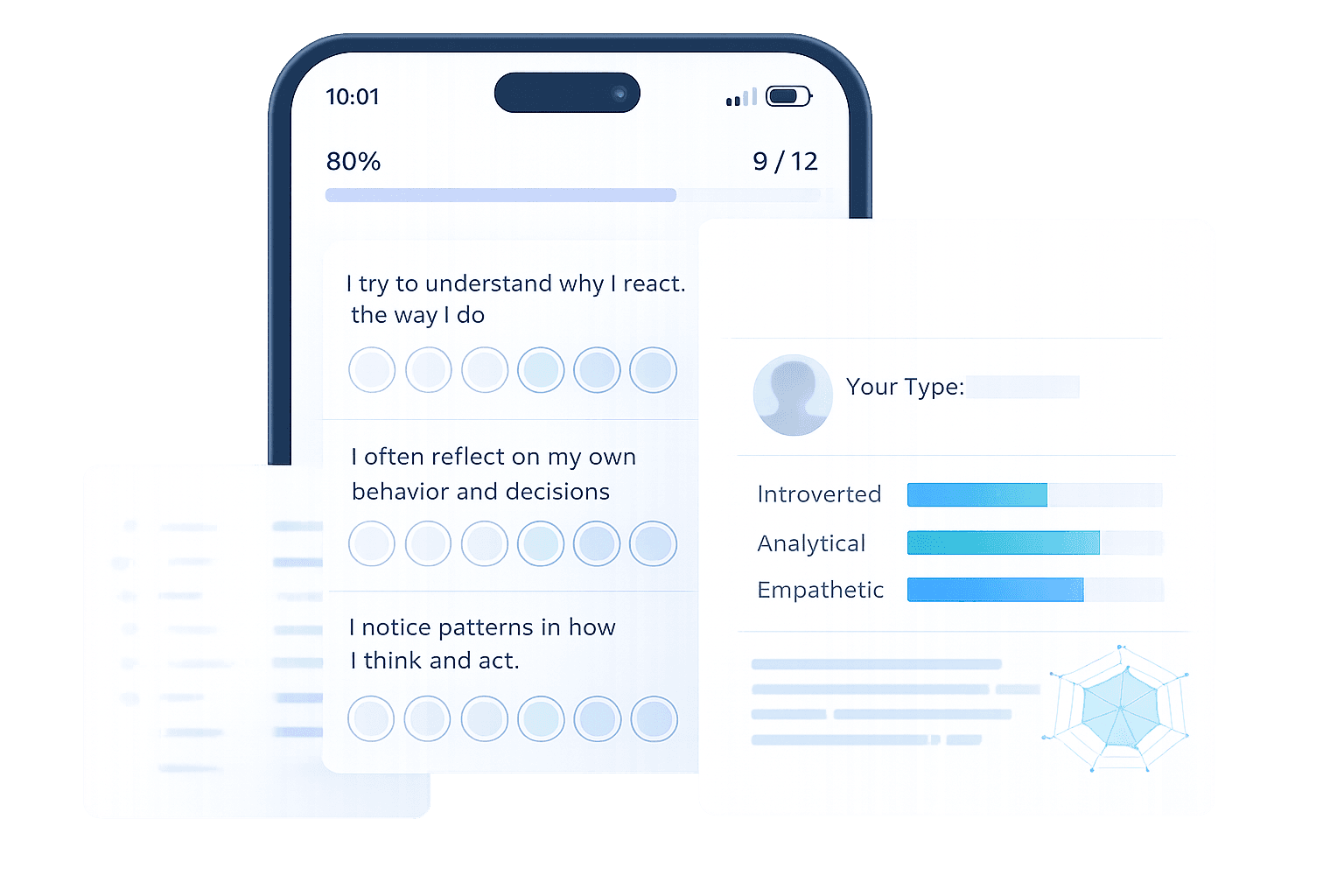

Separate hard work from sustained depletion
A demanding role can be tiring without becoming burnout. The more important question is whether work repeatedly leaves you depleted, detached, less effective, and unable to recover before the next day begins.
See what work carries into the rest of life
Explore whether work pressure is affecting concentration, patience, motivation, personal time, relationships, sleep, and your ability to feel mentally off-duty.
How the work exhaustion test works
Review sustained work demands
Think about workload, urgency, responsibility, interruptions, expectations, and how much emotional or mental effort your role requires over time.
Compare demand with recovery
Consider whether evenings, weekends, sleep, and boundaries restore enough capacity—or whether the next work period begins before you have recovered.
Read one overall burnout-signs level
Your answers are combined into a single result, followed by a report that explains the broader pattern and where work-related strain may be affecting daily functioning.
The report keeps work exhaustion inside the broader burnout picture.
The World Health Organization describes burnout as an occupational phenomenon linked to chronic workplace stress that has not been successfully managed. Perself is an educational self-reflection tool and is not an official WHO, MBI, or BAT assessment.
Your result is one overall level from minimal to strong burnout signs. The report may discuss exhaustion, detachment, cognitive strain, effectiveness, work boundaries, and recovery, but those themes are not reported as separate validated subscales.
Questions about work exhaustion
Is work exhaustion the same as burnout?
Is work exhaustion the same as burnout?
Not always. A period of heavy work can leave you exhausted and still improve with adequate rest. Burnout is more concerning when depletion, mental distance from work, reduced effectiveness, and poor recovery become persistent.
Is burnout officially considered a medical diagnosis?
Is burnout officially considered a medical diagnosis?
The World Health Organization classifies burnout in ICD-11 as an occupational phenomenon, not a medical condition. Persistent symptoms can overlap with health conditions that deserve professional assessment.
Does this test measure workplace burnout only?
Does this test measure workplace burnout only?
This route is written around occupational strain, but the shared assessment also asks about broader exhaustion, cognitive overload, effectiveness, boundaries, and recovery. The final result is one overall burnout-signs level.
Does the report tell me which work factor caused the problem?
Does the report tell me which work factor caused the problem?
No. A self-report result cannot establish cause. Workload, control, support, sleep, health, personal circumstances, and many other factors can shape how exhausted or detached you feel.
When should I seek additional support?
When should I seek additional support?
Consider speaking with a qualified health professional or appropriate workplace support when exhaustion or reduced functioning is persistent, severe, or difficult to improve. Seek urgent local help if your safety is at risk.