
Take a bipolar mood test that looks beyond mood alone
Feeling up or down is only part of the picture. Perself helps you compare mood with energy, need for sleep, activity, mental pace, motivation, decisions, and the way ordinary responsibilities feel during different periods.
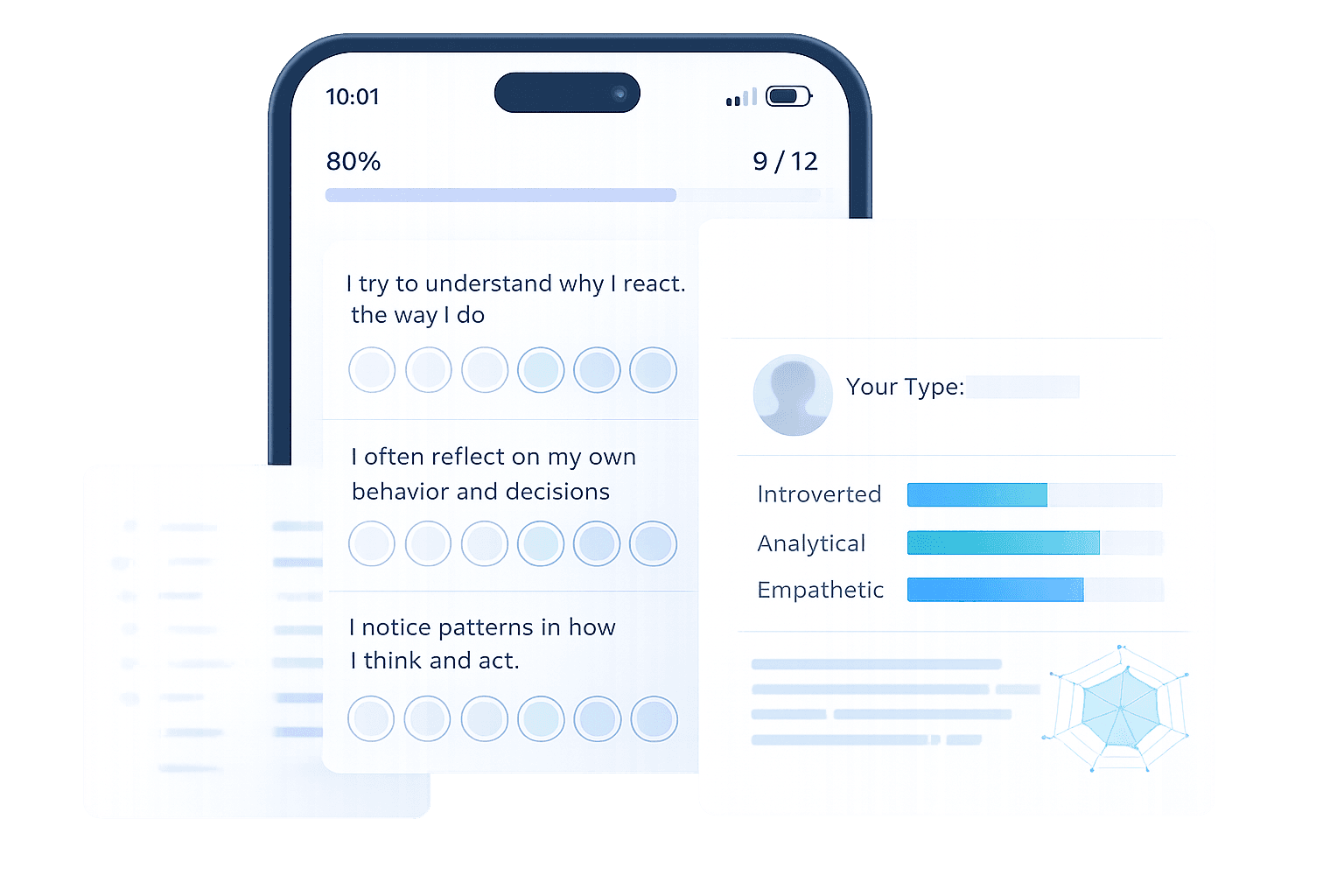

Ask what changes with the mood
A more useful reflection compares emotional state with sleep, drive, activity, concentration, confidence, social behaviour, and decision-making instead of treating mood as a standalone signal.
Distinguish normal fluctuation from a bigger shift in your routine
Everyone has better and worse days. Pay attention to periods where several parts of your usual rhythm change enough to alter how you work, relate, rest, plan, or recover.
How to look at mood in context
Compare mood with energy and sleep
Think about whether brighter, more irritable, or lower periods also come with noticeable changes in activity, rest, motivation, thought speed, or the ability to slow down.
Receive one overall bipolar-traits level
Perself combines all answers into one level from Minimal Traits to Strong Traits. It does not provide a separate mood, energy, sleep, mania, or depression score.
Read the result against your own baseline
Use the report to compare how different periods affect responsibilities, communication, decisions, productivity, and recovery relative to what is normal for you.
Mood becomes more informative when the rest of your rhythm changes too
The narrative report discusses emotional variability, energy and motivation, stress, social behaviour, work, responsibilities, and decisions because these themes help place the overall traits level in context.
That context is still not a diagnosis. Bipolar disorder involves clinically evaluated episodes and requires attention to duration, severity, frequency, impairment, history, and other possible causes of mood or energy change.
Bipolar mood test questions
How is this different from a general mood test?
How is this different from a general mood test?
This route focuses specifically on how mood changes relate to energy, sleep, activity, motivation, decisions, and functioning over time rather than rating whether you feel good or bad today.
Does changing mood from day to day mean bipolar disorder?
Does changing mood from day to day mean bipolar disorder?
Not by itself. Ordinary mood variability can happen for many reasons. Bipolar assessment looks for more distinct episodes and considers accompanying changes in energy, activity, sleep, behaviour, duration, and impairment.
Why is reduced need for sleep different from simply sleeping less?
Why is reduced need for sleep different from simply sleeping less?
Sleeping less because of stress, work, insomnia, or circumstances is not the same as feeling unusually rested or energized despite needing less sleep. That distinction is part of the broader context a clinician would consider.
What result will Perself give me?
What result will Perself give me?
You receive one overall bipolar-traits level from Minimal to Strong Traits plus a detailed narrative report. Perself does not diagnose a mood episode or bipolar subtype.
Can depression, anxiety, ADHD, stress, medication, substances, or physical illness affect mood and energy?
Can depression, anxiety, ADHD, stress, medication, substances, or physical illness affect mood and energy?
Yes. Similar changes can have multiple explanations and conditions can overlap. A self-report cannot identify the cause or distinguish these possibilities reliably on its own.
When should mood changes be discussed with a professional?
When should mood changes be discussed with a professional?
Consider qualified support when changes are recurrent, severe, escalating, disruptive to daily functioning, involve risky behaviour, or affect your safety. An online test should not delay care.
Mood is easier to interpret when you know what happened to energy and sleep
A mood label can hide the most useful detail. “I felt great” could describe an ordinary good week, or it could describe a period that also included much less need for sleep, faster thoughts, unusually high activity, more plans, and decisions that felt out of character.
A lower period can also be more than sadness. Energy, interest, concentration, social engagement, sleep, and the effort required for ordinary tasks may shift together. The combination and the timeline matter more than one emotional adjective.
Perself gives you a structured way to compare those pieces. It does not tell you whether they form a clinical mood episode. If the pattern is significant or disruptive, a professional can evaluate it with the history and context an online questionnaire cannot capture.