
What does your EQ look like when life gets messy?
A high-level label means very little without context. This EQ test helps you look at the emotional abilities behind the result: what you notice, how you regulate yourself, how you read other people, and what happens when pressure tests those skills.
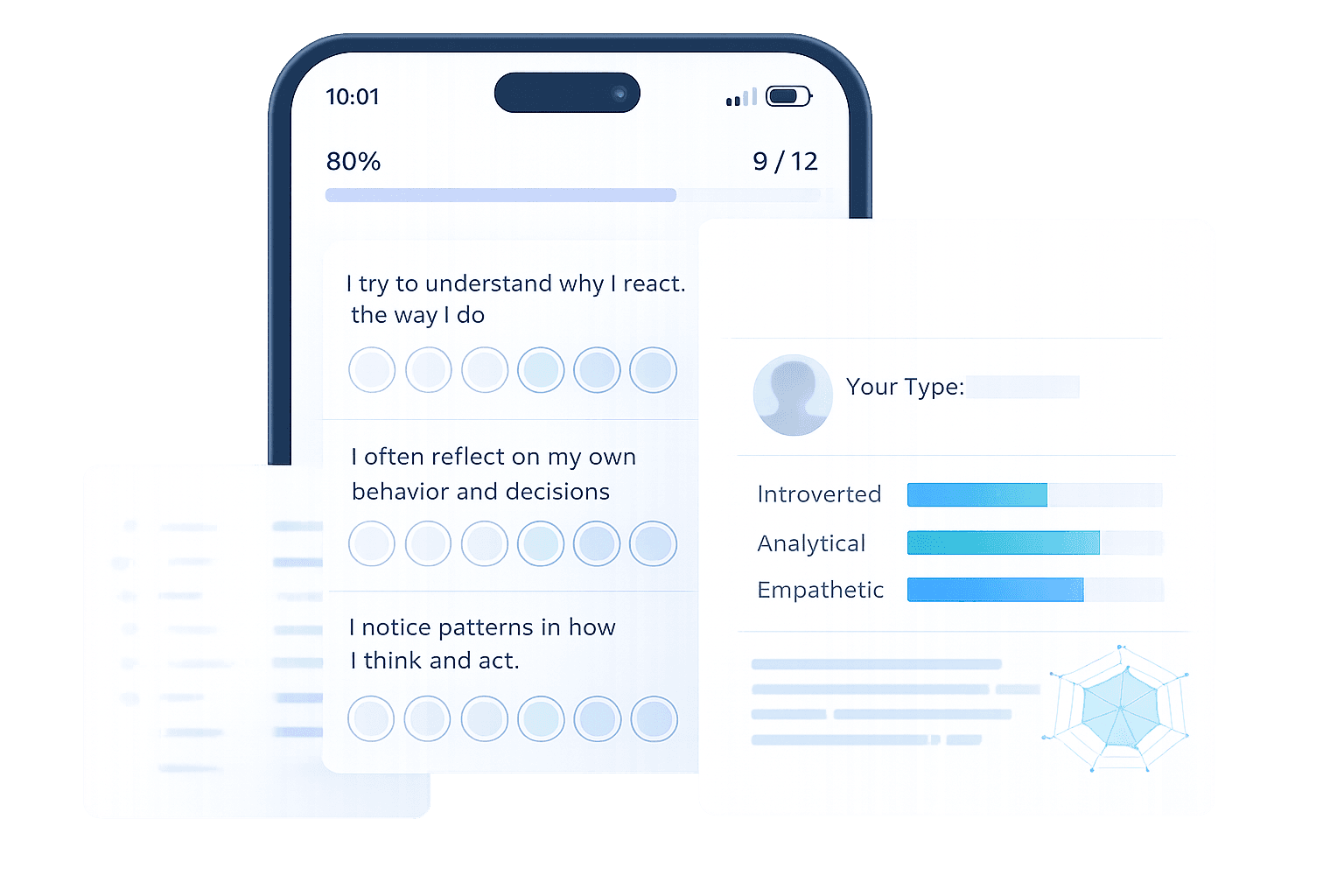

Turn an EQ level into something you can recognize
Look beyond the idea of being 'good with emotions' and notice where your strengths actually appear: self-awareness, emotional control, empathy, communication, or adapting when plans and moods change.
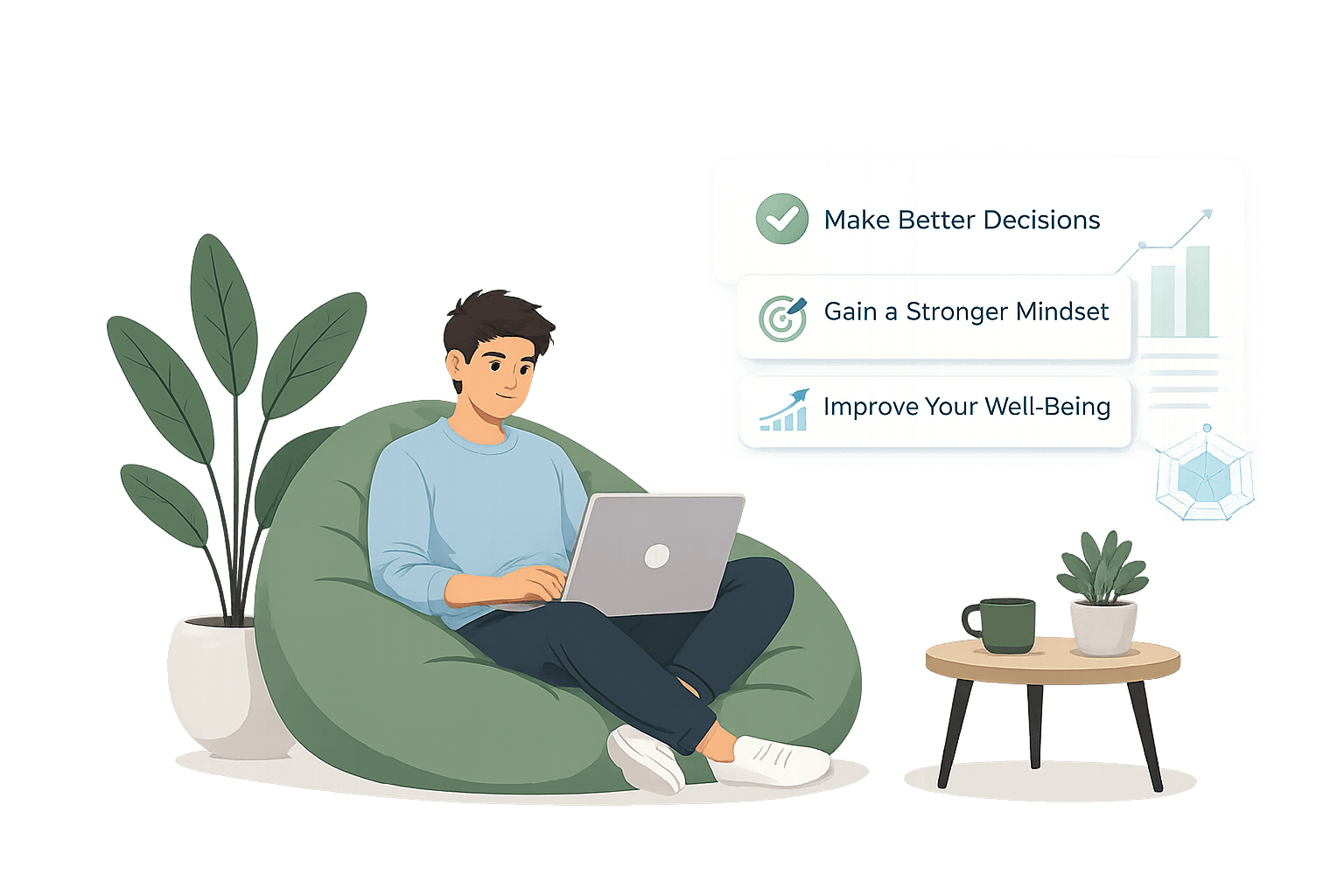
Spot where a strength stops transferring
You might stay calm at work but become reactive in close relationships, understand other people well but struggle to name your own feelings, or communicate clearly until you feel criticized. Those contrasts are often more useful than one flattering label.
Make your EQ level easier to interpret
Answer from your usual behavior
Think about recurring situations rather than your best day. How do you respond to tension, feedback, disappointment, uncertainty, another person's distress, or a sudden change of plan?
See the abilities behind the overall result
Your answers draw on awareness, regulation, empathy, communication, and adaptability so the result is grounded in more than a vague idea of emotional intelligence.
Compare the result with your own experience
Use the report to test whether the level fits how you actually behave across relationships, decisions, work, stress, and recovery after emotionally difficult moments.
An EQ level is useful when it explains a pattern, not when it becomes a badge
Two people can land in a similar overall range for very different reasons. One may be highly empathic but easily overwhelmed by conflict; another may stay composed under pressure but miss subtle emotional cues from other people.
Your Perself report uses the overall EQ result as the starting point, then connects it with the emotional habits reflected in your answers. That gives you something more useful to compare with daily life: the situations where your emotional skills feel natural, the situations where they become less reliable, and the behaviors you may want to strengthen next.
EQ test questions
What does EQ stand for?
What does EQ stand for?
EQ means emotional quotient and is commonly used as shorthand for emotional intelligence. In everyday use, both terms point to how people recognize, understand, regulate, and respond to emotions in themselves and others.
Is an EQ test the same as an emotional intelligence test?
Is an EQ test the same as an emotional intelligence test?
Usually, yes. The search terms are largely interchangeable. This page emphasizes interpreting your overall EQ level and the emotional abilities behind it, while Perself's broader Emotional Intelligence Test page explains the full construct in more depth.
Does a higher EQ mean I handle every emotional situation well?
Does a higher EQ mean I handle every emotional situation well?
No. Emotional skills can be uneven and context-dependent. Someone may be strong at empathy but less skilled at boundaries, or calm under work pressure but more reactive in a close relationship.
Can EQ change over time?
Can EQ change over time?
Emotional habits are not fixed in the same way a test label can sound. Skills such as noticing feelings earlier, checking assumptions, tolerating discomfort, communicating clearly, and recovering after conflict can all be practiced.
Is the EQ result a professional or clinical assessment?
Is the EQ result a professional or clinical assessment?
No. Perself provides an educational self-reflection result. It should not be used as a clinical diagnosis, recruitment score, or definitive judgment of someone's ability or character.