
See how your stress response shows up without forcing it into a fight-flight-freeze-fawn type
Many stress-response quizzes classify people as fight, flight, freeze, or fawn. Perself does not. This broader stress-level assessment looks at how pressure changes your attention, emotional tension, physical activation, sense of control, pace, and ability to recover.
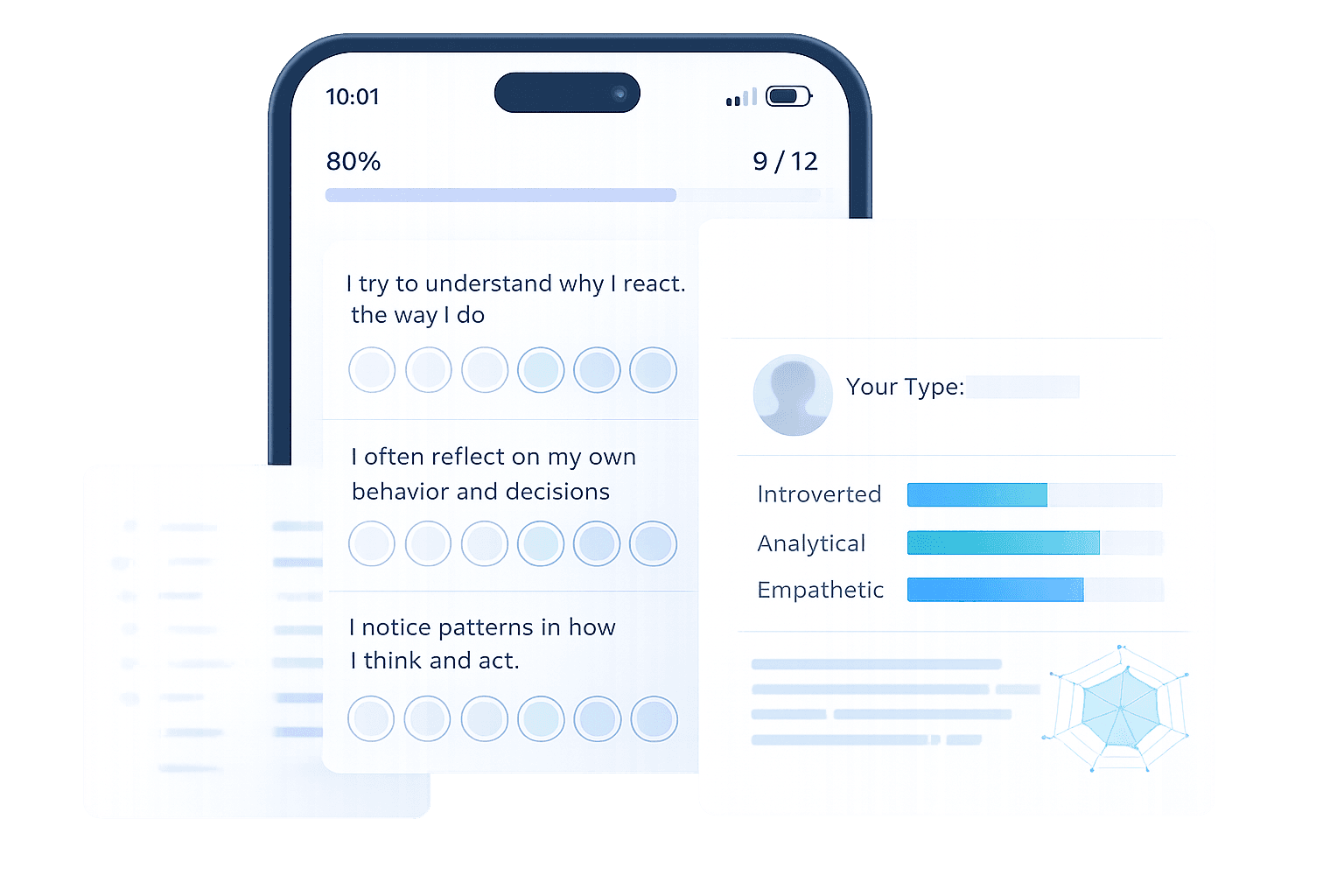

Notice what pressure changes first
Look for racing or repetitive thoughts, difficulty focusing, irritability, urgency, muscle tension, restlessness, overworking, or difficulty mentally switching off.

Separate a response from a fixed type
You may react differently depending on the demand, relationship, level of control, or available support. The assessment summarizes overall stress burden rather than assigning one trauma-response identity.
Follow your response from pressure to recovery
Notice the first signal
Think about what changes earliest when demands rise: attention, thoughts, mood, body tension, pace, boundaries, or the urge to keep working.
Observe what keeps the system activated
Consider whether you continue monitoring problems, replay decisions, sacrifice recovery, become more reactive, or feel unable to regain a sense of control.
Read the response inside your overall stress level
Perself returns one Level 1–5 stress result. It does not assign fight, flight, freeze, fawn, or another response type.
Your output is a stress level, not a response-style label
The questionnaire covers perceived pressure, cognitive overload, emotional tension, physical activation, and recovery/control. Those answers combine into one overall stress result rather than a dominant response type.
That broader view can still help you recognize how pressure usually affects you. The useful question is not which label you belong to, but what changes under stress, what prolongs the activation, and what genuinely helps you regain capacity afterward.
Stress response test questions
Will this test tell me whether I am fight, flight, freeze, or fawn?
Will this test tell me whether I am fight, flight, freeze, or fawn?
No. Perself does not return a fight, flight, freeze, or fawn type. It reports one overall Level 1–5 stress level.
Why does this differ from other stress-response quizzes?
Why does this differ from other stress-response quizzes?
Many online quizzes use a response-type framework. This product instead measures broader current stress burden through pressure, mental overload, emotional and physical tension, and recovery/control.
Can my response to stress vary by situation?
Can my response to stress vary by situation?
Yes. Reactions can change with context, perceived control, relationship dynamics, past experience, available resources, and the kind of demand you are facing.
Does physical tension count as a stress response?
Does physical tension count as a stress response?
It can. Muscle tightness, restlessness, elevated arousal, headaches, and other physical experiences can accompany stress, but they can also have other causes that an online test cannot diagnose.
Is this a trauma-response assessment?
Is this a trauma-response assessment?
No. It is a general stress-level self-assessment and does not diagnose trauma-related conditions or assign a trauma-response type.
When should I get additional support?
When should I get additional support?
Consider qualified support if stress responses are persistent, severe, affecting health or daily functioning, or difficult to distinguish from anxiety, trauma symptoms, sleep problems, or medical causes.
A useful stress response is a sequence you can observe, not a personality category
Under pressure, attention can narrow, the body can become more activated, emotional reserve can shrink, and the urge to act quickly or keep working can increase. Those reactions are real even when they do not fit neatly into one response-type label.
Context also matters. The way you respond to an urgent deadline may be different from how you react to conflict, uncertainty, caregiving pressure, or a situation where you have little control.
This route therefore focuses on what pressure changes and how long recovery takes, while keeping the actual product output honest: one overall stress level rather than a fight-flight-freeze-fawn classification.