
Build a fuller autism traits profile without forcing every experience into the same box
Your social experience may look one way, sensory load another, and routines or focused interests something else again. Perself helps you compare the mix behind one overall result instead of assuming every trait should be equally strong.
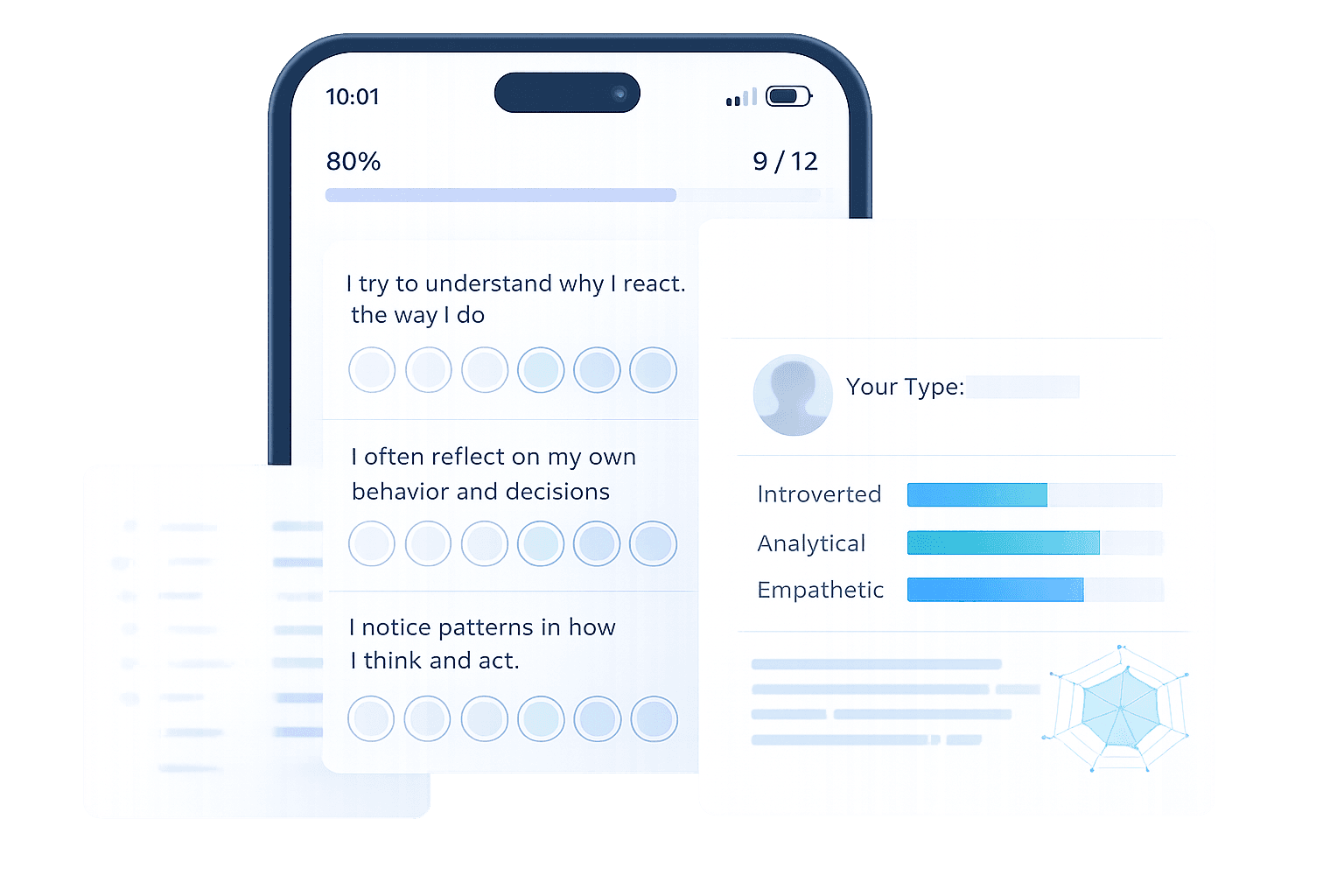

See where your experience is uneven rather than pretending it is uniform
You might find indirect communication difficult but enjoy social connection, rely heavily on routine but have few sensory problems, or notice the opposite mix. A richer profile starts by allowing those differences to remain visible.
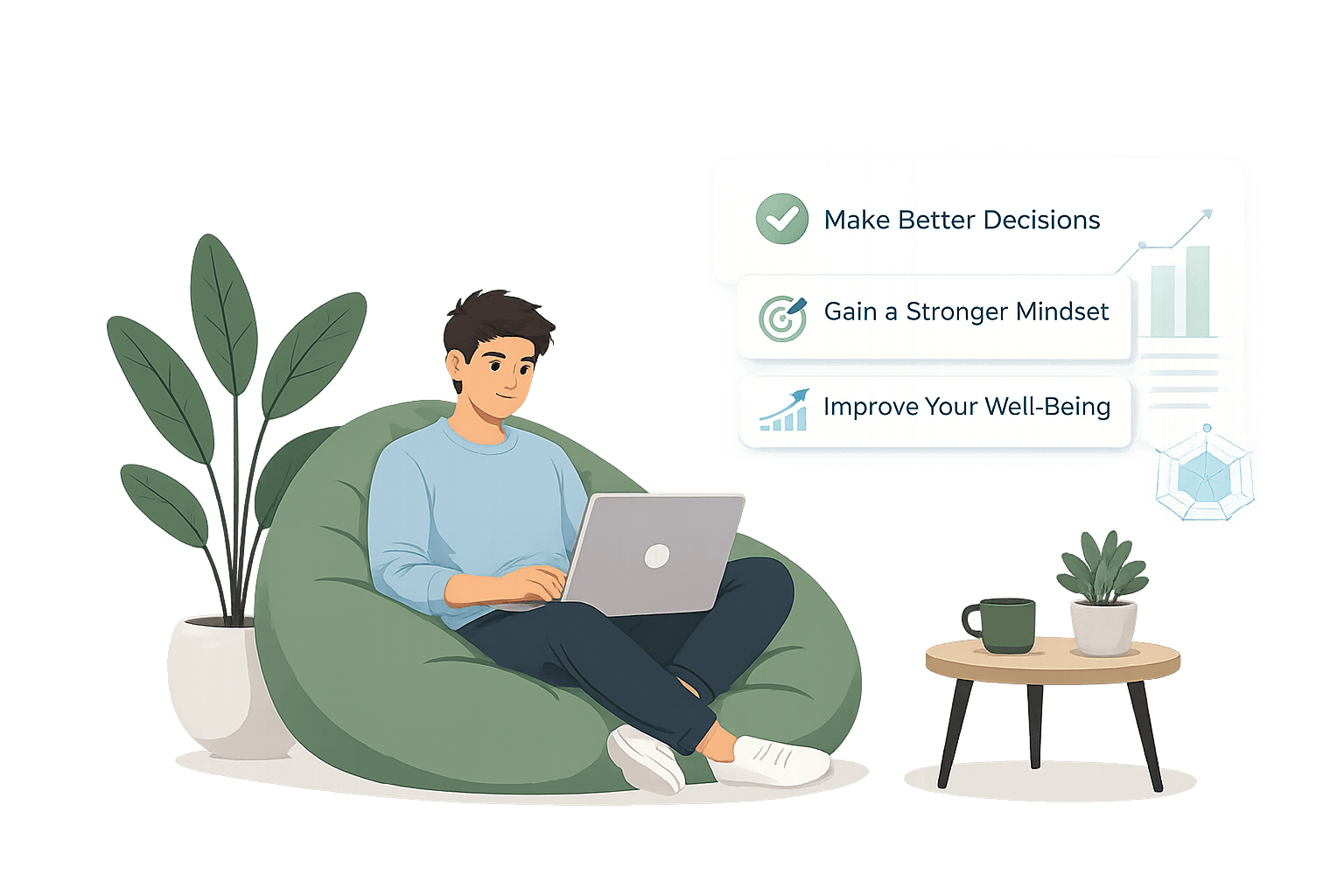
Use the report to connect strengths, friction, and support needs
The detailed report puts the overall result beside themes such as communication, sensory experience, predictability, focus, relationships, and daily functioning so you can see where the result feels most useful in your own life.
Build context around the overall result
Answer across different parts of daily life
Think about social situations, communication, sensory environments, change, routine, focused interests, work or study, relationships, and the situations where you feel most or least comfortable.
Receive one overall autism-traits level
Perself combines the full questionnaire into a single level from Minimal Traits to Strong Traits. The product does not generate separate diagnostic domain scores.
Read the narrative as your profile context
Use the report to see which areas match strongly, which feel less relevant, what seems situational, and what kinds of environments or supports appear to change your experience.
A personal profile is more useful when it leaves room for unevenness
Perself gives you one overall autism-traits level, then a detailed narrative report that discusses communication, social perception, routine and flexibility, sensory experience, focused attention, relationships, professional life, problem-solving, strengths, and challenges.
That report is the profile context on this page. It is not a chart of independent clinical subscores. The value is in seeing how the overall result maps onto the areas of your life that feel easiest, most effortful, most consistent, or most dependent on the environment.
Autism profile test questions
What does “autism profile” mean on this page?
What does “autism profile” mean on this page?
It means the broader picture created by reading your one overall autism-traits level alongside the detailed narrative report. Perself does not claim to create a clinical diagnostic profile or separate domain-by-domain scores.
Will I get separate social, sensory, routine, or communication scores?
Will I get separate social, sensory, routine, or communication scores?
No. Your answers produce one overall autism-traits level. The report discusses different themes in prose rather than giving independent numerical subscores.
Can an autism-related profile be uneven?
Can an autism-related profile be uneven?
Yes. People can have very different combinations of strengths, preferences, difficulties, coping strategies, and environmental needs. Not every characteristic has to look equally strong.
Can masking or coping make the profile harder to recognize?
Can masking or coping make the profile harder to recognize?
It can. Some adults learn to adapt or mask in ways that make effort less visible. Answer from the experience behind the outcome, including preparation and recovery, rather than only from whether you managed the situation successfully.
Is this profile based on the AQ or RAADS-R?
Is this profile based on the AQ or RAADS-R?
No. Perself uses its own educational questionnaire. The result should not be interpreted as an AQ, RAADS-R, or other validated clinical screening profile.
Can this profile diagnose autism?
Can this profile diagnose autism?
No. A professional autism assessment includes developmental history, patterns across settings, functional impact, direct clinical evaluation, and consideration of other explanations.
A neat label can hide the most informative part: the differences inside the pattern
People often search for a profile because a single score feels too simple. That instinct makes sense. Daily life is made of contexts: a quiet conversation can feel different from a group, a planned change different from a surprise, and a familiar sensory environment different from a crowded one.
A clinical autism assessment also looks wider than one number. It considers social communication, restricted or repetitive patterns, resistance to change, interests, sensory differences, developmental history, and the effect on life across settings.
Perself does not recreate that assessment. Its value is narrower: one overall traits result plus enough narrative context to help you see where your own experience is consistent, uneven, supported, or costly. That can make the next question much better than simply asking whether a label fits.